
Utility patents can make up a substantial portion of a business’s value. A New York utility patent attorney helps inventors and businesses protect new and useful inventions through the federal patent system. Utility patents protect how an invention works, is used, or is made. Successfully obtaining patent protection often requires careful analysis, strategic drafting, and compliance with complex United States Patent and Trademark Office (USPTO) requirements. The best way to achieve those goals is by working with NYC utility patent counsel.
At Jones IP Law, our intellectual property-centered firm helps inventors, startups, and growing companies secure and protect valuable intellectual property. Our legal experience and technical knowledge enable us to assist inventors of all kinds in seeking protection for their inventions.
Working With a New York Utility Patent Attorney: Key Points
A New York utility patent attorney helps protect how your invention works, is used, or is made, from the first patentability review through enforcement and portfolio growth.
Key Takeaways
- Utility patents cover processes, machines, manufactures, and compositions of matter, including software-implemented inventions and medical devices.
- To qualify, an invention must be patent-eligible, useful, new, and non-obvious compared with existing prior art.
- Inventors tied to universities, research institutions, or shared workspaces should confirm inventorship and ownership before filing.
- Utility patents require maintenance fees at 3.5, 7.5, and 11.5 years after issuance to stay in force.
What Is a Utility Patent?
Utility patents grant an inventor the right to exclude others from making, using, offering for sale, selling, or importing a claimed invention. Utility patents may include inventions such as:
- Machines,
- Manufacturing processes,
- Software-implemented inventions,
- Medical devices,
- Chemical compositions,
- Mechanical systems, and
- Industrial equipment.
Utility patents are by far the most common patent type. Still, there are two others: design patents, which protect an item’s ornamental appearance, and plant patents, which protect certain new plants.
Protect How It Works
You Solved a Real Problem. Let’s Protect the Way You Solved It.
Utility patents can be some of the most valuable assets a business owns. Jones IP Law combines intellectual property knowledge with technical experience to help New York inventors and companies turn new technology into protected, enforceable rights.
Contact a Patent AttorneyMeet Our New York Utility Patent Attorney
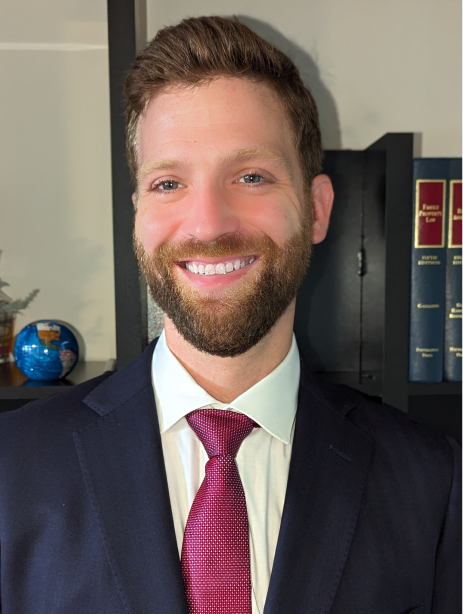
Michael Jones | Brooklyn, New York
Patents
Trademarks
IP Litigation
Bar Admissions
What Does a Utility Patent Attorney in New York Do?
A New York utility patent attorney helps inventors and businesses protect new and useful inventions through every stage of the patent process. From evaluating whether an invention may qualify for patent protection to preparing patent applications, responding to USPTO examinations, and developing long-term patent strategies, your utility patent attorney in NYC helps transform technical innovations into valuable intellectual property rights. Our guidance reflects the unique business environment and innovation ecosystem of New York.
Evaluating Patentability
The process often begins with your New York utility patent attorney performing a detailed review of the invention. I work to understand:
- How the invention functions,
- What problem does it solve, and
- How it differs from existing technology.
To receive a utility patent, an invention generally must be:
- Patent-Eligible. Generally, processes, machines, manufactures, and compositions of matter may qualify for protection. Certain concepts cannot be patented, including abstract ideas, laws of nature, and natural phenomena.
- Useful. Inventions must have a practical purpose and provide a real and identifiable benefit.
- New. An invention is new when it has not been publicly disclosed in a patent, publication, public use, sales activity, or other prior art.
- Non-Obvious. Even if no identical invention exists, the USPTO may reject an application if the claimed innovation represents a predictable variation of known technology that would have been obvious to someone of ordinary skill in the relevant field.
New York inventors work in every field, spanning fintech, advertising technology, media technology, medical devices, consumer products, software platforms, and beyond. Your New York utility patent attorney needs to understand your invention, your industry, and other relevant context to position your application for success.
Conducting Prior Art Research
Prior art refers to information that is publicly available before filing a patent application. Prior art can include earlier patents, published patent applications, technical articles, product manuals, public demonstrations, commercial products, and other disclosures that describe relevant technology. Patent examiners use prior art when determining whether an invention is new and non-obvious.
Your attorney analyzes existing patents, patent applications, publications, and technical disclosures to identify features that may distinguish your invention from known technology. I then advise you on how to tailor your application to avoid running into issues with similar inventions.
Preparing Your NYC Utility Patent Filing
Your New York utility patent application must contain a written description of the invention, drawings when required, and patent claims that define the legal scope of protection. Your New York utility patent attorney carefully drafts your application to:
- Describe the invention completely,
- Identify who invented it,
- Support broad and narrow claim strategies, and
- Anticipate potential USPTO objections.
Inventors affiliated with Columbia University, New York University (NYU), Cornell Tech, Mount Sinai, and other research institutions may face questions about inventorship, ownership, sponsored research obligations, and technology transfer policies.
Inventors throughout New York, including those developing products in shared workspaces, maker communities, design studios, and small manufacturing environments, may also face questions about inventorship and ownership.
Your attorney can help you understand who qualifies as an inventor, who does not, and who might have rights to a particular invention.
Managing USPTO Examination
After you apply, the USPTO assigns someone to review the application through a process called examination. Patent examiners frequently issue Office Actions identifying questions or concerns related to an application.
Responding effectively often requires both legal analysis and technical understanding, so your attorney usually handles the response. I communicate with the USPTO, prepare responses, and advocate for patent protection throughout the examination process.
Enforcing and Maintaining Patents
A New York utility patent attorney also helps patent owners identify patent infringement and evaluate enforcement options. Depending on the circumstances, I can assist by:
- Investigating potentially infringing products or processes,
- Comparing the accused technology to the patent claims,
- Preparing cease-and-desist or licensing communications,
- Negotiating licensing agreements, or
- Initiating litigation when an informal resolution of a dispute fails.
By helping you understand the strength of your patents and the available enforcement options, your lawyer helps maximize the value of the intellectual property you work to secure.
Notably, utility patent holders also must pay maintenance fees to the USPTO at 3.5, 7.5, and 11.5 years after issuance to keep the patent in force.
Building Patent Portfolios
Patent protection often extends beyond a single invention. Many businesses throughout New York develop multiple products, technologies, and improvements over time. Your utility patent lawyer in New York helps you create a coordinated patent strategy that aligns with your unique business objectives and growth potential.
Not Sure Who Owns Your Invention? Sort It Out Before You File.
Collaborators, employers, universities, and shared workspaces can all raise questions about inventorship and ownership. Jones IP Law helps you understand who qualifies as an inventor, who may hold rights, and how to file with confidence.
Discuss Your Legal OptionsProtect Your Innovation with Jones IP Law
Obtaining patent protection typically requires understanding how the technology works, identifying what makes an invention patentable, and drafting claims that support meaningful legal rights. A New York utility patent attorney can make the process as smooth and efficient as possible.
Jones IP Law combines intellectual property law knowledge with substantial technical experience. No matter how complex your invention, I offer personalized, practical patent guidance. If you need assistance with a New York utility patent application, contact Jones IP Law today to discuss your invention and your goals.
Legal References Used to Inform This Page
To ensure the accuracy and clarity of this page, we referenced official legal resources during the content development process:
Questions for a New York Utility Patent Attorney
Answers to common questions from New York inventors and businesses about utility patent protection.
A New York utility patent attorney helps inventors and businesses protect how an invention works, is used, or is made. That includes evaluating patentability, researching prior art, drafting the application and claims, handling USPTO examination, and advising on enforcement, licensing, and long-term portfolio strategy.
An inventor is someone who contributed to the conception of at least one claimed element of the invention, not simply someone who built a prototype or funded the work. Naming inventors correctly matters, because errors in inventorship can create ownership disputes and may be raised to challenge a patent later.
A utility patent gives you the right to exclude others from making, using, offering for sale, selling, or importing the claimed invention in the United States, generally for 20 years from filing, subject to maintenance fees. It does not automatically let you sell a product that relies on someone else’s patented technology.
Broad claims cover more variations of your invention and can block more competitors, but they face a higher risk of rejection over prior art. Narrow claims are easier to obtain but easier to design around. A strong application usually includes both, so you keep meaningful protection even if broader claims are narrowed.
Local Resources for Inventors in Brooklyn, NY
Utility patents protect how an invention works. The following official and local resources can help Brooklyn inventors research prior inventions and understand the patent process.
1. Patent Research
USPTO Patent Public Search
- Search U.S. patents and published applications to see what has already been invented.
- Patent Public Search
New York Public Library, Thomas Yoseloff Business Center (Patent and Trademark Resource Center)
- Stavros Niarchos Foundation Library, 455 Fifth Avenue, 5th Floor, New York, NY 10016
- Phone: (212) 592-7057
- Email: business@nypl.org
- An official USPTO resource center where librarians help the public learn patent search tools.
- Patents and trademarks guide
2. USPTO Assistance
USPTO Inventors Assistance Center
- Phone: 1-800-786-9199 | Local: (571) 272-1000
- Hours: Weekdays, 9:00 a.m. to 6:00 p.m. ET
- Answers general questions about patent forms, rules, and fees, and directs callers to the right USPTO staff.
- Official website
USPTO Pro Se Assistance Center
- Phone: (866) 767-3848
- Helps inventors filing on their own understand USPTO procedures.
- USPTO Northeast Office resources
USPTO Northeast Regional Outreach Office
- Phone: (571) 270-7100
- Email: northeast@uspto.gov
- Hours: Monday through Friday, 8:30 a.m. to 5:00 p.m. ET
- Serves inventors in New York and other northeastern states with public education and connections to USPTO resources.
- Official website
3. Free Business Help
Brooklyn Small Business Development Center (Pace SBDC)
- Phone: (212) 618-6655
- Email: sbdc@pace.edu
- Free one-on-one business advising for Brooklyn inventors and entrepreneurs.
- Official website
Brooklyn Public Library, Business & Career Center
- Central Library, 10 Grand Army Plaza, Brooklyn, NY 11238
- Phone: (718) 968-7275
- Free business research resources, librarian appointments, and intellectual property workshops.
- Official website
Tip: Keep a dated inventor’s notebook or digital log of your idea, drawings, and test results. Don’t sell or publicly show your invention before speaking with a patent attorney.